
Andrey Zhikalov / Elma Bureau

On the way to everyone else.
A familiar object, a new generation, and a day that keeps changing plans.
One more game. Coffee before the beach. Something to eat on the way back. A friend who can join after all. The best part of a day together is often the part nobody planned.
This editorial imagines the Nokia 7280 moving through those moments: occasionally in a hand, worn on a cord, or put away while something else takes over.
An object with a point of view
Nokia introduced the 7280 in 2004 as part of its Fashion Collection. Its narrow body, glossy finish and dial in place of a conventional keypad gave it a character of its own. Fashion was part of the original idea, not something added afterwards. Nokia’s original launch announcement.
Seen today, that silhouette still interrupts the familiar outline of a phone. The pale lines and small circle feel considered, almost like the details of a clasp. There is pleasure in recognising it — and just as much in encountering it for the first time.

Joining us later?

One more game.
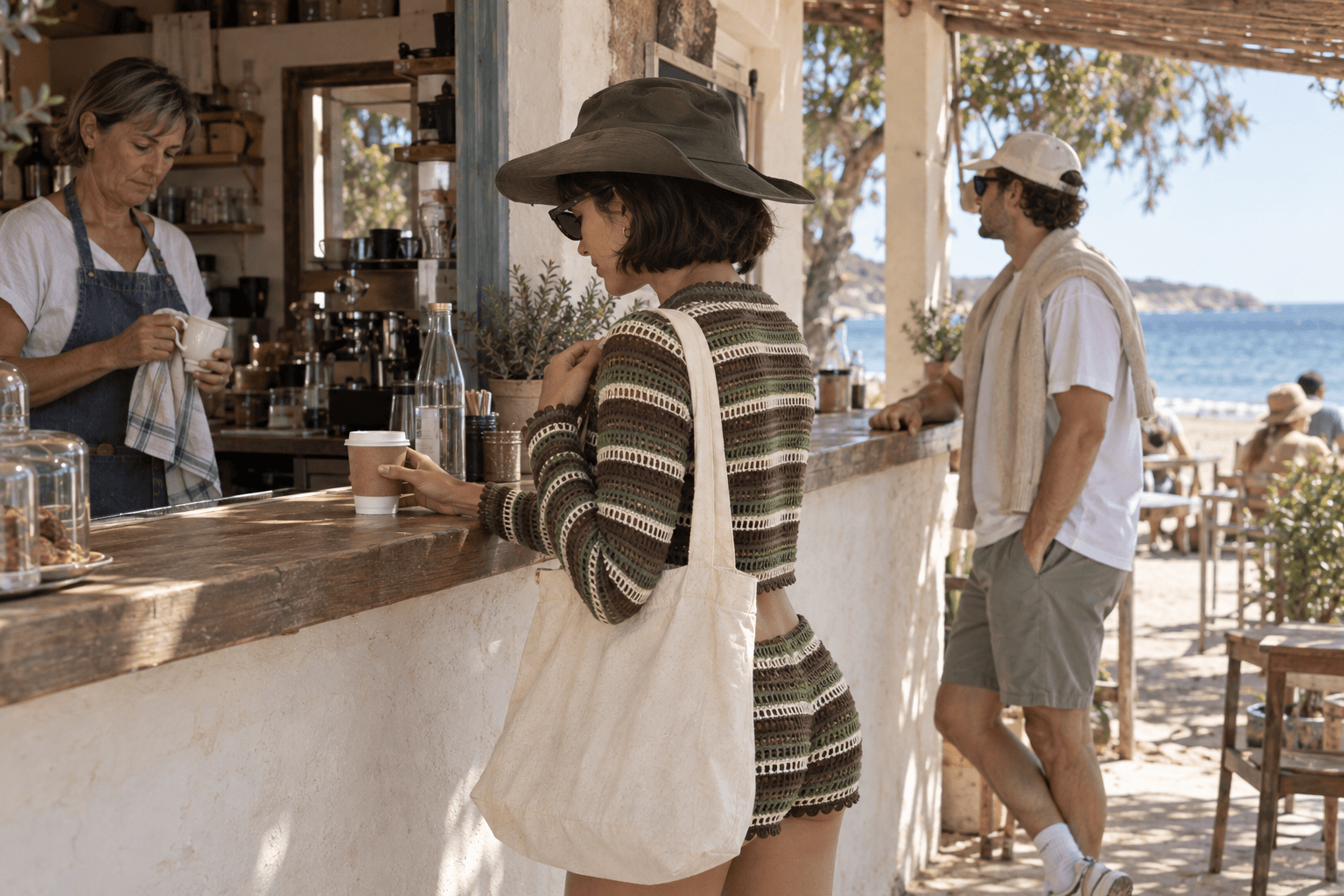
Coffee, then the beach.
Out of the pocket
The setting is the present. Court shoes give way to sandals, a knitted cape catches the sea breeze, and black lace comes out for the evening. The phone finds a place among these textures without requiring the clothes, or the people, to dress around it.
Sometimes it is visible on a cord. Sometimes it stays in a pocket. A rally, a shared portion of fries, a conversation at the coffee counter: each deserves room to become the whole picture.

Nothing booked for the afternoon.

No rush.

Enough fries for everyone.
The sound of being there
A call brings its surroundings with it. Wind near the water. Someone laughing beside you. The small pause before an invitation is accepted.
Messages have their own rhythm. Here, the interest is in the sound of another person and how quickly a plan can change when you hear them.
The nostalgia lives in the object. The day belongs to the people carrying it.
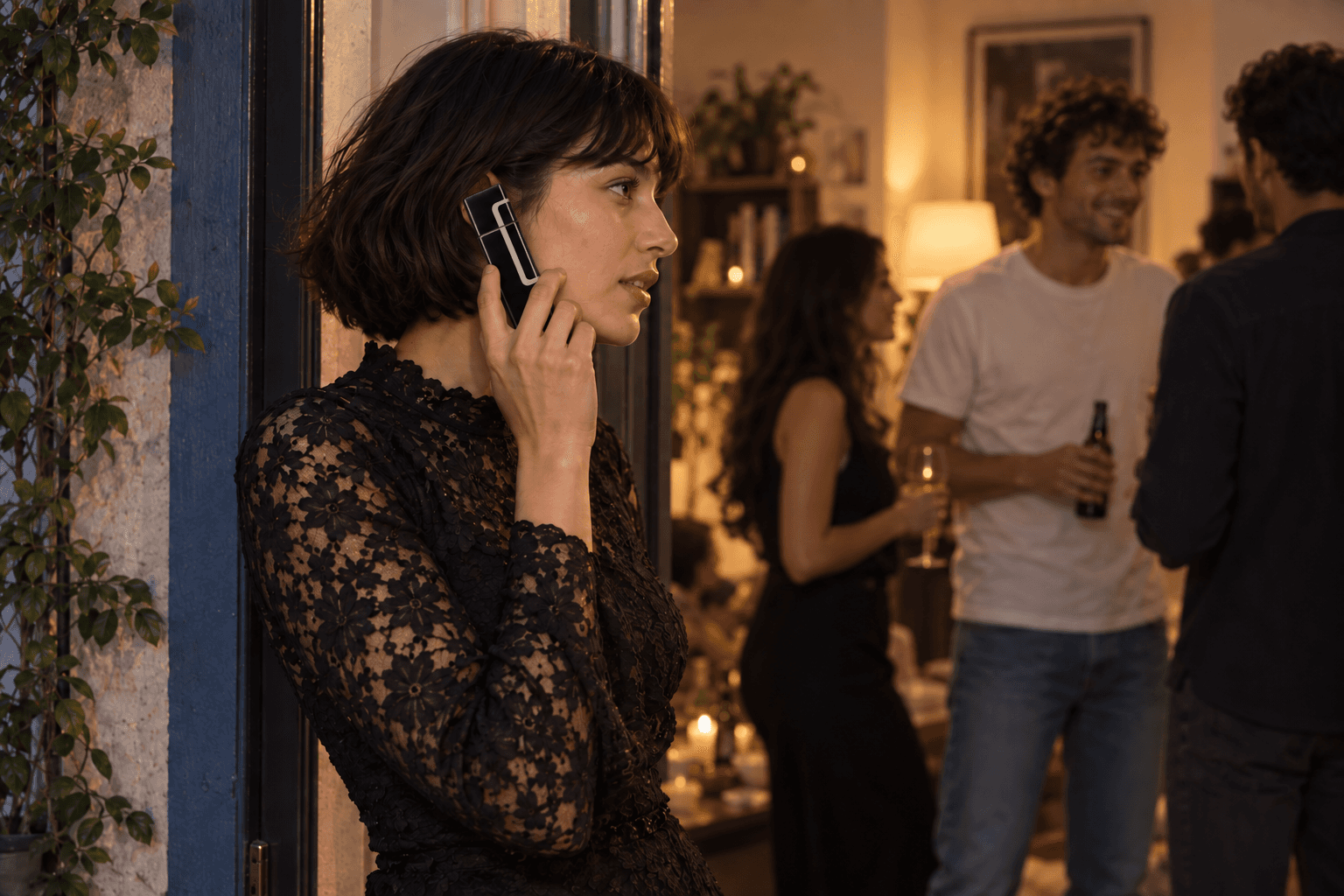
See you in a minute.
On the way to everyone else.
A familiar object, a new generation, and a day that keeps changing plans.
One more game. Coffee before the beach. Something to eat on the way back. A friend who can join after all. The best part of a day together is often the part nobody planned.
This editorial imagines the Nokia 7280 moving through those moments: occasionally in a hand, worn on a cord, or put away while something else takes over.
An object with a point of view
Nokia introduced the 7280 in 2004 as part of its Fashion Collection. Its narrow body, glossy finish and dial in place of a conventional keypad gave it a character of its own. Fashion was part of the original idea, not something added afterwards. Nokia’s original launch announcement.
Seen today, that silhouette still interrupts the familiar outline of a phone. The pale lines and small circle feel considered, almost like the details of a clasp. There is pleasure in recognising it — and just as much in encountering it for the first time.
Joining us later?
One more game.
Coffee, then the beach.
Out of the pocket
The setting is the present. Court shoes give way to sandals, a knitted cape catches the sea breeze, and black lace comes out for the evening. The phone finds a place among these textures without requiring the clothes, or the people, to dress around it.
Sometimes it is visible on a cord. Sometimes it stays in a pocket. A rally, a shared portion of fries, a conversation at the coffee counter: each deserves room to become the whole picture.
Nothing booked for the afternoon.
No rush.
Enough fries for everyone.
The sound of being there
A call brings its surroundings with it. Wind near the water. Someone laughing beside you. The small pause before an invitation is accepted.
Messages have their own rhythm. Here, the interest is in the sound of another person and how quickly a plan can change when you hear them.
The nostalgia lives in the object. The day belongs to the people carrying it.
See you in a minute.

