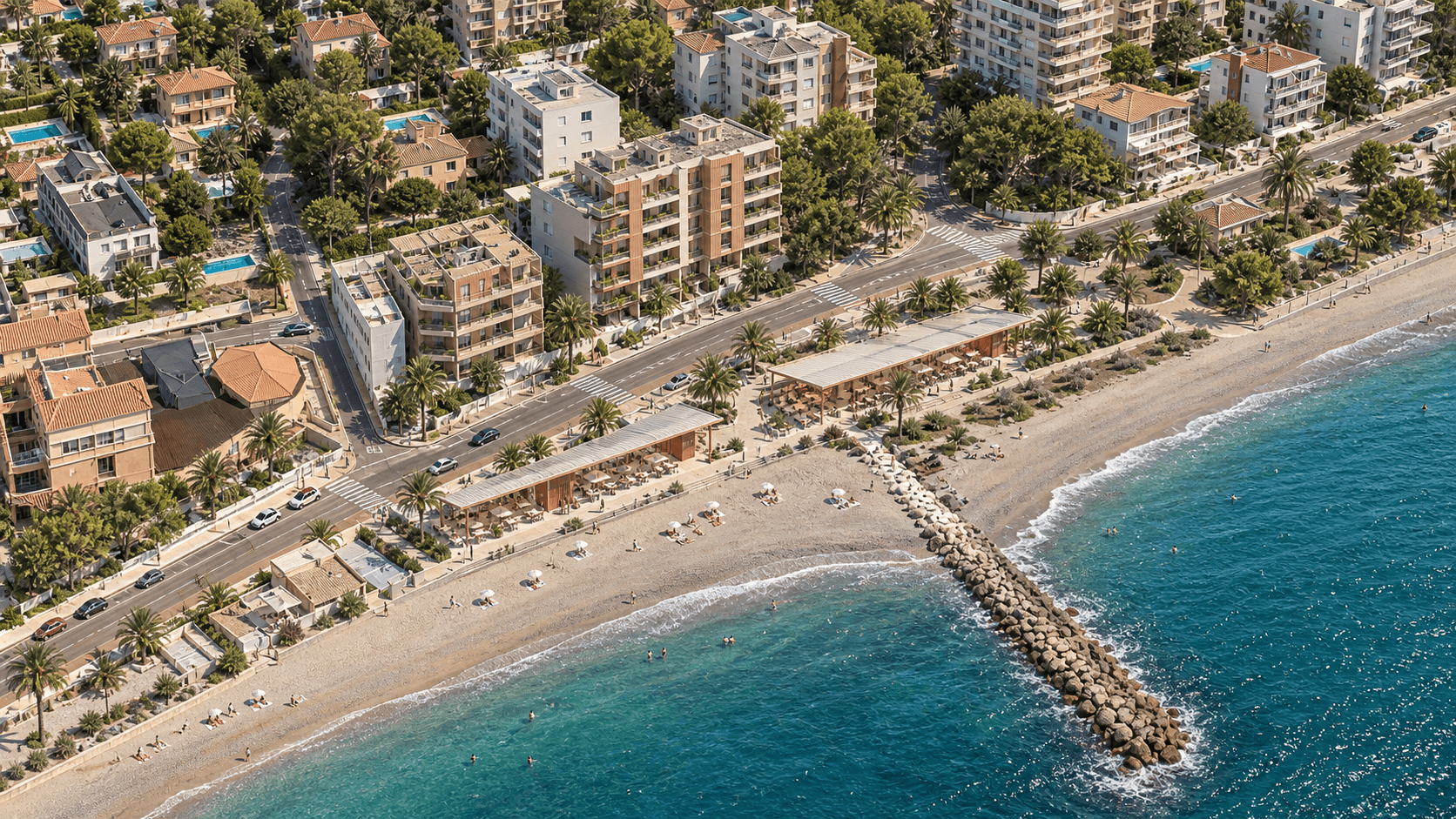
Andrey Zhikalov / Elma Bureau
A garden water point for Benicàssim.
Agua Común is a small public refill point conceived by Elma Bureau. A curved mineral wall, green ceramic bowl and warm-metal tap gather an everyday action into a quiet architectural object. The study asks how public amenities might feel at home among the gardens and residential edges of Benicàssim.
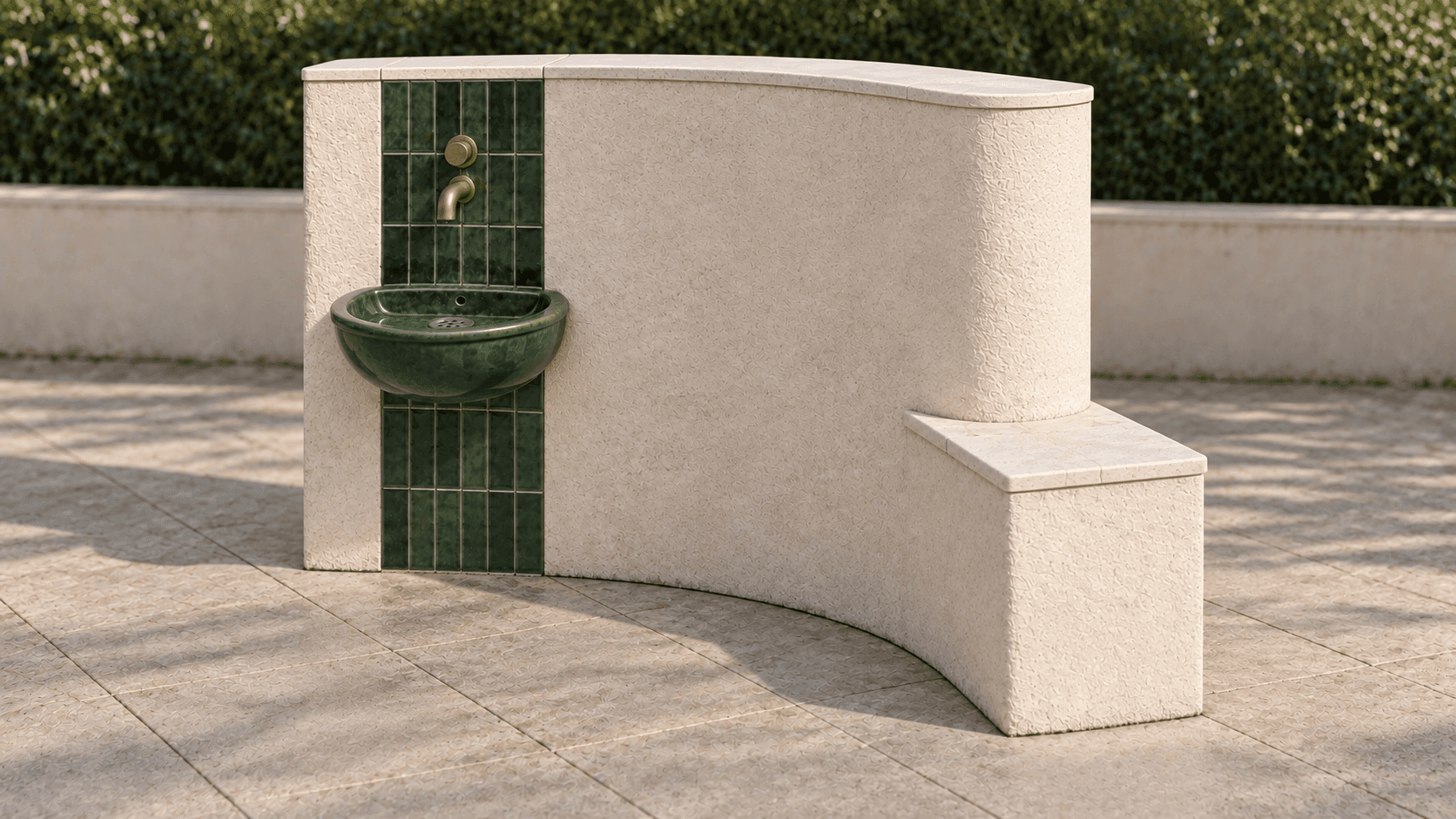
A gentle enclosure
The wall bends around the point of use, giving it a defined place without enclosing it. Its rounded end becomes a short, low ledge: somewhere to set a bag while refilling. From the side, the curve and changing height give the object a distinct silhouette.
A regional conversation
Benicàssim’s seaside villas and gardens offer a varied architectural context. Onda’s ceramic tradition provides another regional reference. The study draws these influences into a contemporary composition. Ivory mineral surfaces, deep green glaze and warm metal are our own palette, rather than a reconstruction of a historic fountain.
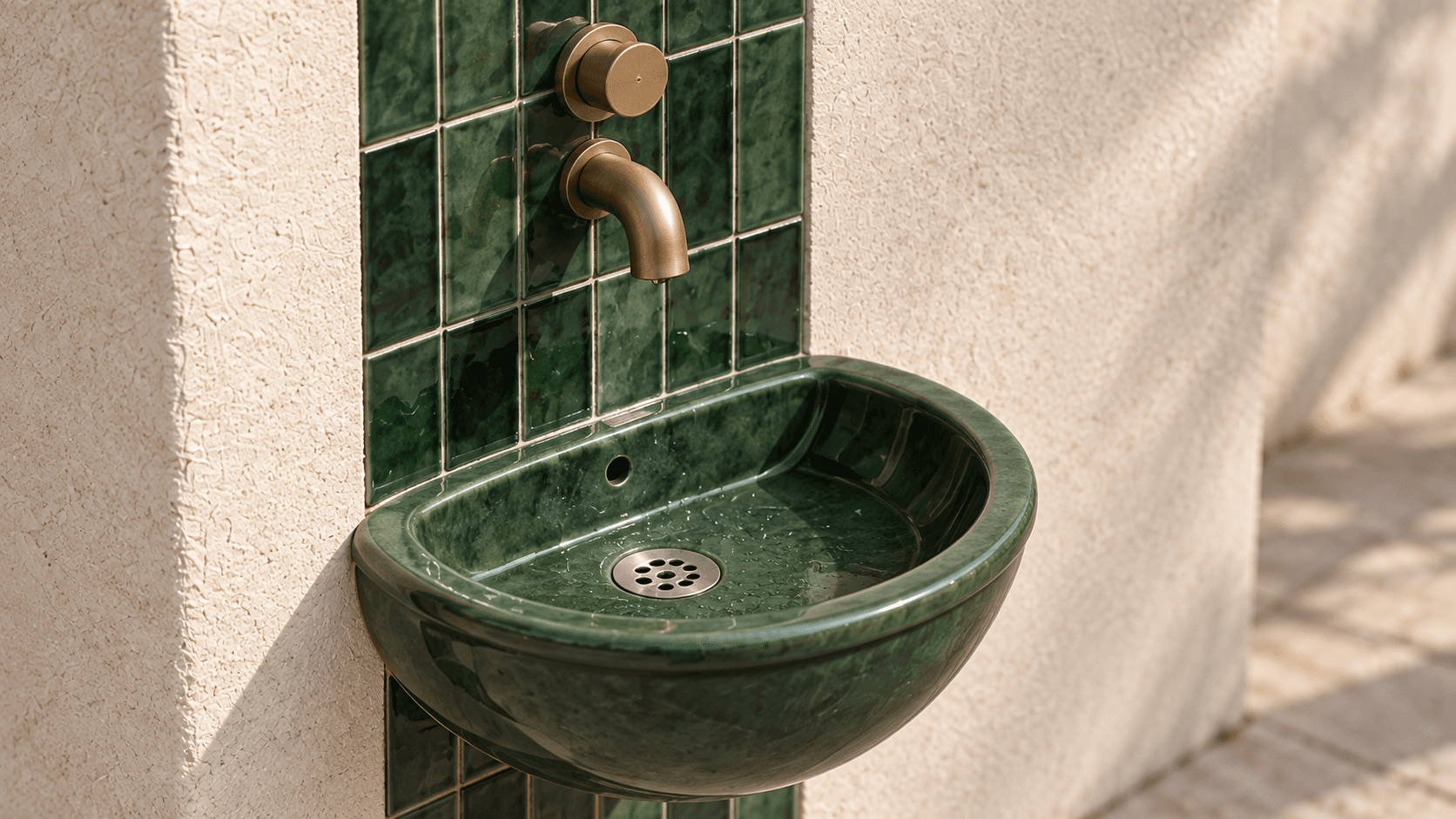
One familiar action
A tap and bowl make the point of use immediately recognisable. Bottle refilling is the intended everyday gesture, guiding the relationship between outlet, basin and control. The vertical ceramic strip gathers these parts together, giving the working area a clear identity within the larger wall.

Materials at close range
Fine surface grain, slender joints and glazed reflections bring the object into focus. Ceramic introduces variation where the hand and eye meet the fountain; the pale wall gives it a calm background. The bowl, tap and tiled surface are conceived as distinct parts, with inspection and replacement informing their development.

A place along the way
The concept could be explored beside a garden boundary, near seating or at a transition between neighbourhood and promenade. Each setting would shape its orientation and approach. Its identity comes from a few consistent elements, leaving room for the surrounding planting, paving and architecture to remain present.
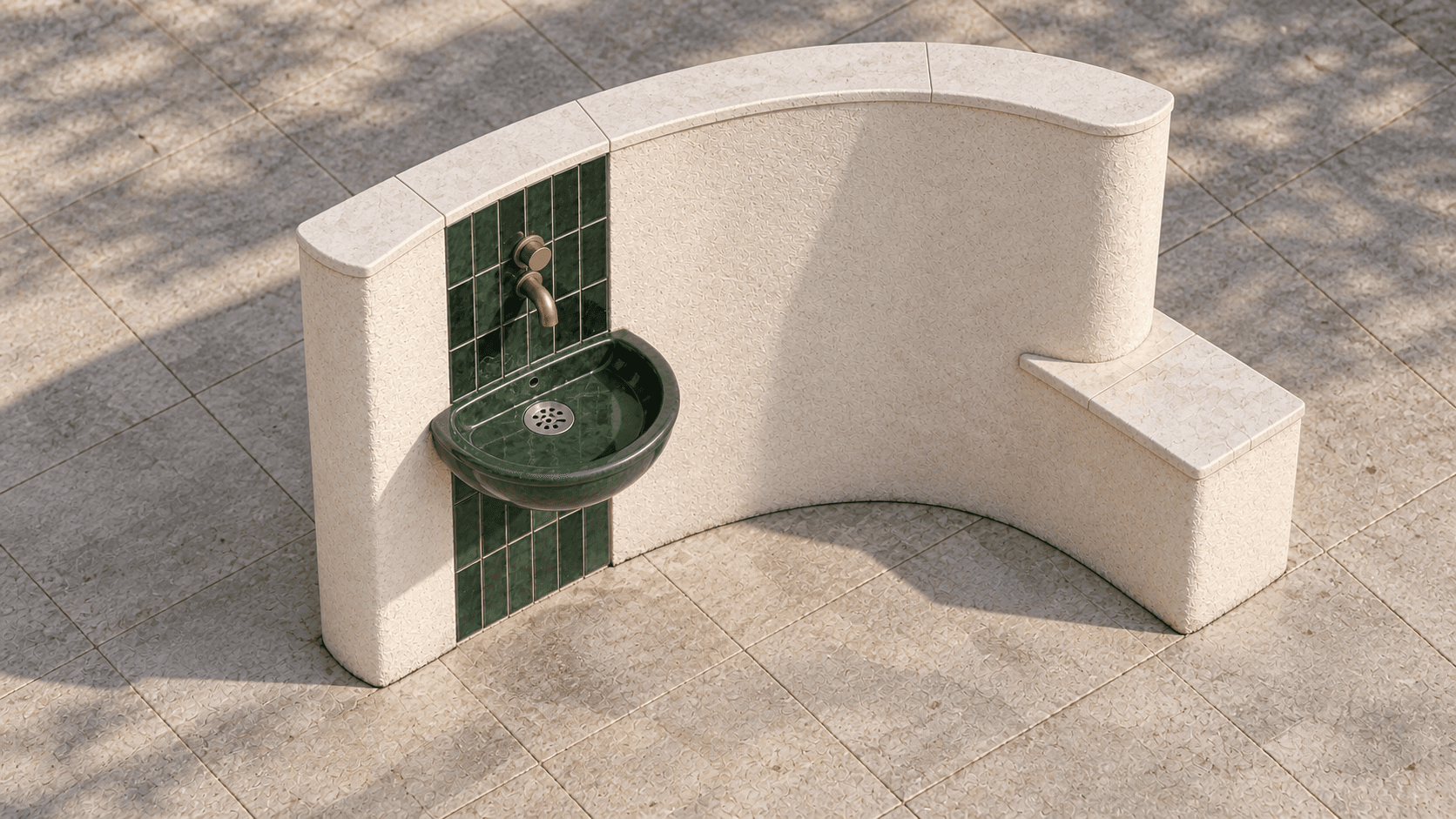
Agua Común is an original, uncommissioned speculative concept by Elma Bureau. The AI-generated images and indicative garden settings show a design study, not a built installation, a verified Benicàssim site or engineering documentation. Water supply, hygiene, drinking-water suitability, accessibility, drainage and materials have not been validated and would require specialist design and testing.
Context: Benicàssim Tourism — Ruta de las Villas and Onda Tourism — official visitor guide. These references inform the cultural setting; they do not document the proposed object.
A garden water point for Benicàssim.
Agua Común is a small public refill point conceived by Elma Bureau. A curved mineral wall, green ceramic bowl and warm-metal tap gather an everyday action into a quiet architectural object. The study asks how public amenities might feel at home among the gardens and residential edges of Benicàssim.
A gentle enclosure
The wall bends around the point of use, giving it a defined place without enclosing it. Its rounded end becomes a short, low ledge: somewhere to set a bag while refilling. From the side, the curve and changing height give the object a distinct silhouette.
A regional conversation
Benicàssim’s seaside villas and gardens offer a varied architectural context. Onda’s ceramic tradition provides another regional reference. The study draws these influences into a contemporary composition. Ivory mineral surfaces, deep green glaze and warm metal are our own palette, rather than a reconstruction of a historic fountain.
One familiar action
A tap and bowl make the point of use immediately recognisable. Bottle refilling is the intended everyday gesture, guiding the relationship between outlet, basin and control. The vertical ceramic strip gathers these parts together, giving the working area a clear identity within the larger wall.
Materials at close range
Fine surface grain, slender joints and glazed reflections bring the object into focus. Ceramic introduces variation where the hand and eye meet the fountain; the pale wall gives it a calm background. The bowl, tap and tiled surface are conceived as distinct parts, with inspection and replacement informing their development.
A place along the way
The concept could be explored beside a garden boundary, near seating or at a transition between neighbourhood and promenade. Each setting would shape its orientation and approach. Its identity comes from a few consistent elements, leaving room for the surrounding planting, paving and architecture to remain present.
Agua Común is an original, uncommissioned speculative concept by Elma Bureau. The AI-generated images and indicative garden settings show a design study, not a built installation, a verified Benicàssim site or engineering documentation. Water supply, hygiene, drinking-water suitability, accessibility, drainage and materials have not been validated and would require specialist design and testing.
Context: Benicàssim Tourism — Ruta de las Villas and Onda Tourism — official visitor guide. These references inform the cultural setting; they do not document the proposed object.